Environment programme
Lake Restoration
Urban lakes lose their capacity to hold water, support life and absorb floodwater when sewage, silt and waste build up over years. We restore them in stages, beginning with measurement and ending with long-term care.
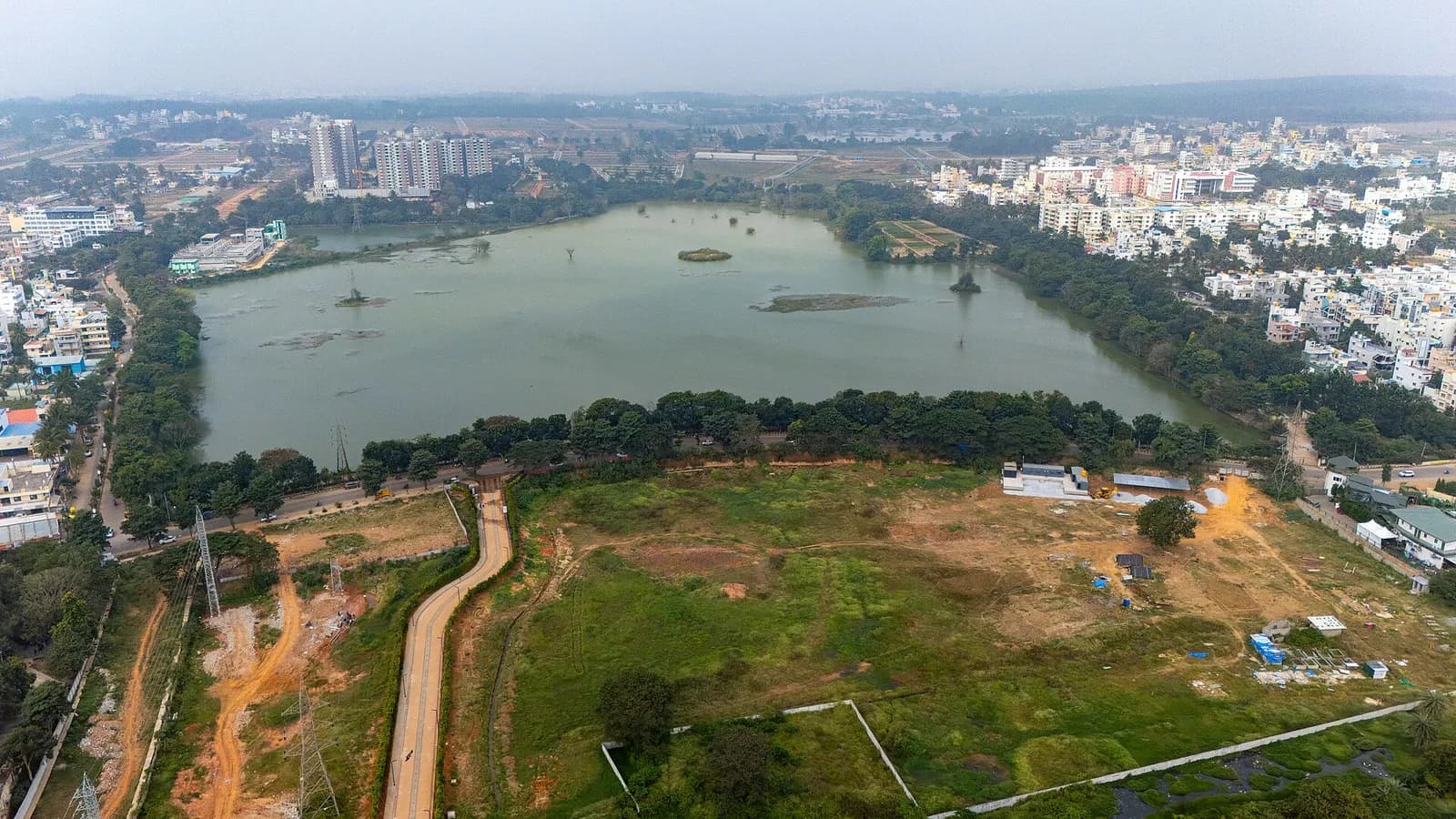
Why urban lakes degrade
Most urban lakes decline gradually. Sewage and untreated drains carry nutrients into the water, which feed weed growth. Silt from the catchment settles on the bed and reduces depth. Solid waste collects at the inlets. Encroachment along the edges narrows the lake and cuts off its natural shoreline.
Invasive weeds such as water hyacinth then cover the surface, which reduces the oxygen available to fish and other aquatic life.
Our approach
Each lake follows the same eight steps. The order and scale of the work depend on the baseline.
Step 1: Baseline assessment
Water-quality testing, a silt-depth survey, and mapping of the catchment and every inflow. These findings set the sequence of all later work.
Step 2: Removal of solid waste and invasive weeds
Removal of floating and submerged waste, and of invasive weeds such as water hyacinth, with the material disposed of through proper channels.
Step 3: Desilting
Removal of accumulated silt to restore the designed depth, with dredged material handled and disposed of as the site requires.
Step 4: Inflow management
Silt traps at inlets, and diversion or treatment of sewage inflows, so that pollution does not return once the lake is cleaned.
Step 5: Bioremediation and floating wetlands
Native aquatic plants on floating platforms, which take up nutrients from the water, and biological treatment of the water body.
Step 6: Bund and shoreline strengthening
Repair of bunds and banks, and planting of native shoreline species to hold the soil and filter runoff.
Step 7: Public-access features, where appropriate
Walkways, seating and signage, planned only where the site and the owning authority allow.
Step 8: Community stewardship and ongoing monitoring
Handover to a local stewardship arrangement, with periodic water-quality and vegetation checks reported to the owning body.
Who it's for
Municipal bodies
A documented baseline, a phased plan and monitoring records for each lake.
Housing societies
Maintenance-led restoration for lakes within or beside residential layouts.
Corporates seeking CSR partners
Lake restoration with a defined scope and clear reporting on the work carried out.
Request a lake assessment
Tell us the lake's location, its approximate size and the problems you have noticed. We will propose a baseline study before any work is planned.