
Restore • Rejuvenate • Sustain
Lake & Water Bodies Restoration
Lakes, ponds and traditional water bodies support biodiversity, groundwater recharge, agriculture and community life. We restore them through engineering, ecology and long-term maintenance.
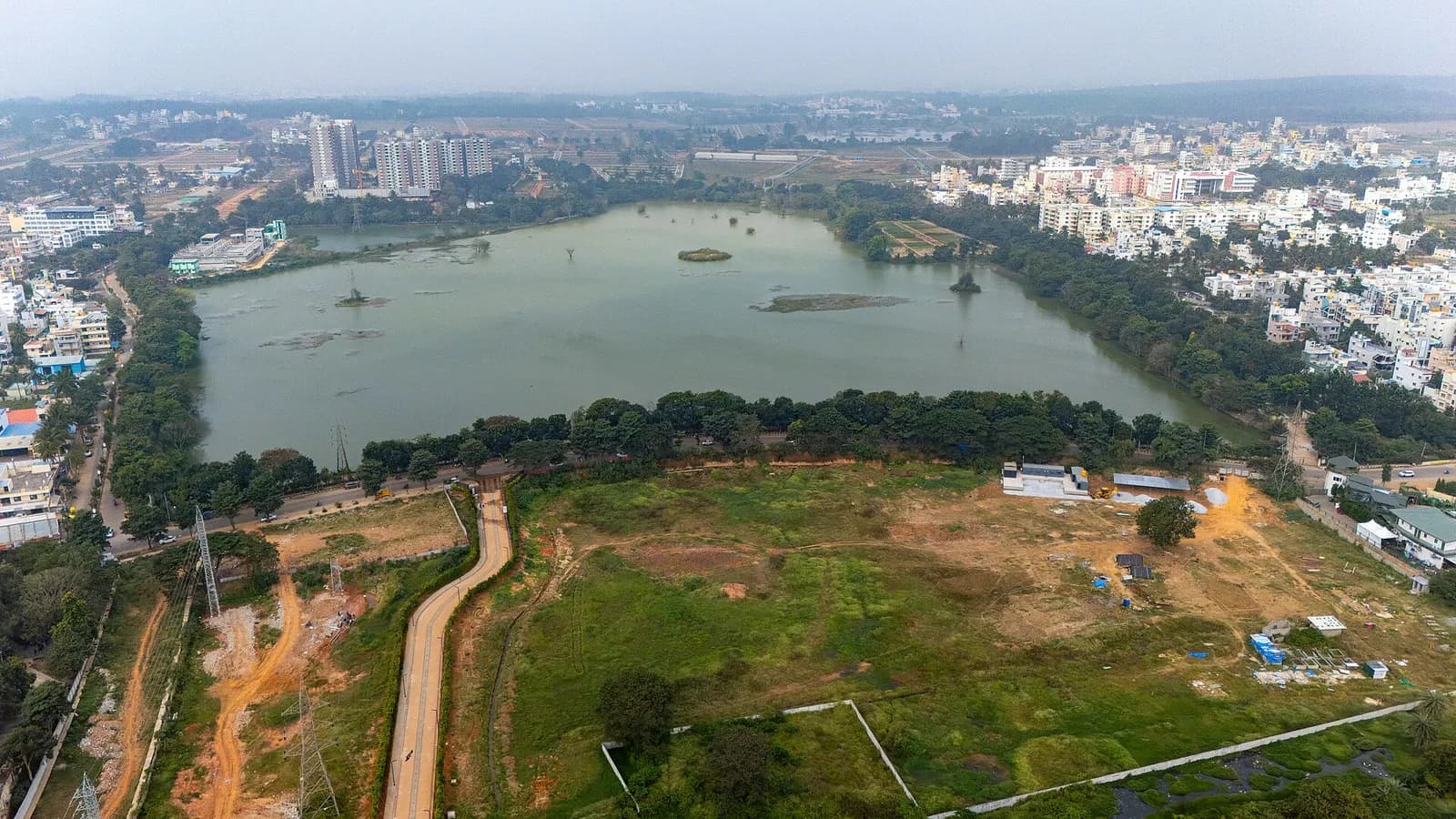
Why water bodies need restoration
Water bodies are essential ecological assets. They support biodiversity, groundwater recharge, agriculture, local livelihoods and community well-being.
Urbanisation, encroachment, untreated waste discharge, silt accumulation and neglect have degraded many lakes, ponds and traditional water bodies.
Our approach
We carry out integrated restoration aimed at improving ecological condition, restoring natural water-holding capacity, and developing sustainable public spaces around the water body.
Our approach combines engineering interventions, hydrological considerations, ecological restoration, landscape development and long-term maintenance.
Our services
Lake and pond restoration
Desilting, deweeding, removal of floating waste and debris, restoration of water-holding capacity, and assessment of inflow and outflow channels.
Lakebank and structural development
Bank strengthening, stone pitching, laterite masonry, gabion structures, erosion protection, retaining walls and drainage improvement.
Ecological rejuvenation
Native aquatic and terrestrial plantation, floating wetlands where suitable, biodiversity enhancement, water-quality assessment and rainwater harvesting initiatives.
Lake beautification and public infrastructure
Walking and cycling pathways, seating, gazebos, public amenities, solar lighting, landscaping and suitable aeration features.
Operation and maintenance
Regular cleaning, waste monitoring, plantation maintenance, periodic inspections and performance monitoring.
Our project development approach
Step 1: Survey and assessment
Site inspection, topographical survey, catchment assessment, water-body condition and identification of pollution sources.
Step 2: Planning and engineering
Restoration concepts, designs, drawings, bills of quantities, cost estimates and implementation plans.
Step 3: Restoration and rejuvenation
Desilting, cleaning, bank protection, drainage improvements and ecological interventions.
Step 4: Beautification and development
Landscaping, pathways, plantation, public amenities and suitable infrastructure.
Step 5: Maintenance and monitoring
Periodic inspections, maintenance schedules and monitoring of ecological and infrastructure outcomes.
See how the work is planned
Project references, with their status, are on the projects page.